
All About Space
All About Space is a fact-filled space book that takes readers on a journey through the wonders of the universe via bite-sized entries.
Covering the solar system, stars, galaxies, black holes and the history of space exploration, it's designed to be
accessible for younger readers while still engaging for adults who enjoy short, informative non-fiction.
Whether you're looking for a space book for family reading, classroom topics, homeschool projects or your own interest
in astronomy and space science, this title offers a clear, enjoyable overview of what we know about the cosmos and how we've learned it.
Purchase on Amazon
Did you know?
The International Space Station is about the size of a football field
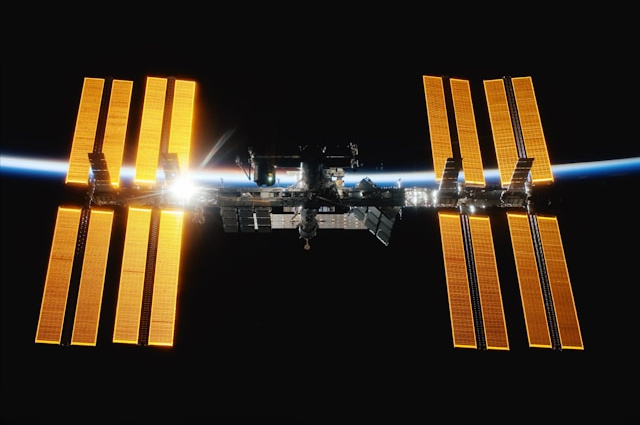
The International Space Station (ISS) is a massive spacecraft that orbits around the Earth at an altitude of about 250 miles (400 kilometres). It was first launched into space in 1998, and since then, it has been continuously occupied by astronauts and cosmonauts from different countries who conduct experiments and research on various topics such as biology, physics, astronomy, and medicine.
The ISS is a truly impressive feat of engineering, measuring about 357 feet (109 meters) end to end, which is roughly equivalent to the size of a football field. It consists of many different modules, each of which serves a specific purpose, such as living quarters, scientific labs, storage areas, and docking ports for visiting spacecraft.
Did you know?
The Voyager spacecraft is the farthest man-made object from Earth
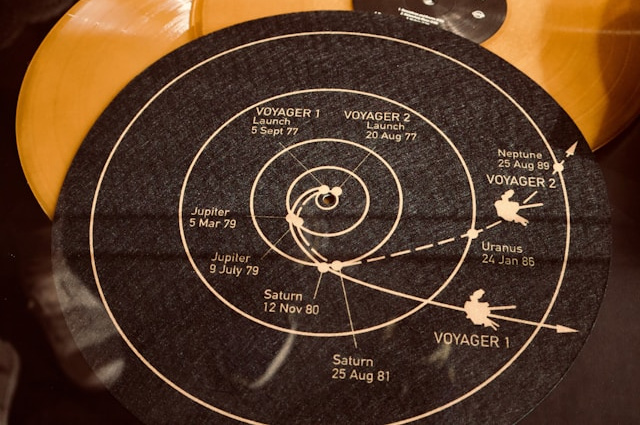
The Voyager spacecraft is a pair of robotic space probes launched by NASA in 1977 on a mission to explore the outer solar system and beyond. The two spacecraft, Voyager 1 and Voyager 2, were designed to study the outer planets of the solar system and their moons, as well as to study the environment of the solar system beyond the planets.
Both Voyager spacecraft were equipped with a suite of scientific instruments, including cameras, spectrometers, magnetometers, and particle detectors. These instruments allowed the spacecraft to study the planets, their moons, and the surrounding environment in great detail.
Did you know?
The universe is estimated to be around 13.8 billion years old
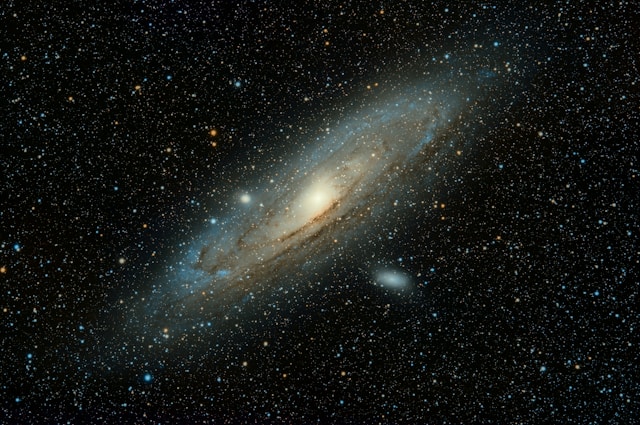
The age of the universe is a fundamental question in cosmology, the study of the origins and evolution of the universe. Scientists have used a variety of techniques to estimate the age of the universe, including studying the cosmic microwave background radiation, the oldest known light in the universe, and the distances and velocities of distant galaxies.
The most widely accepted estimate for the age of the universe is currently around 13.8 billion years old. This estimate is based on measurements of the cosmic microwave background radiation, which is thought to be leftover radiation from the early universe, and on observations of distant supernovae that suggest the universe is expanding at an accelerating rate.