
All About Dinosaurs
All About Dinosaurs is a fact-filled dinosaur book that brings the prehistoric world to life through bite-sized entries.
Covering feathered bodies, powerful bites, migration, parenting, intelligence and survival in extreme environments, it's designed to be
accessible for younger readers while still engaging for adults who enjoy short, informative non-fiction.
Whether you're looking for a dinosaur book for family reading, classroom topics, homeschool projects or your own interest
in prehistoric life, this title offers a clear, enjoyable overview of how dinosaurs lived, behaved and evolved.
Purchase on Amazon
Did you know?
Dinosaurs Could Lose and Regrow Feathers
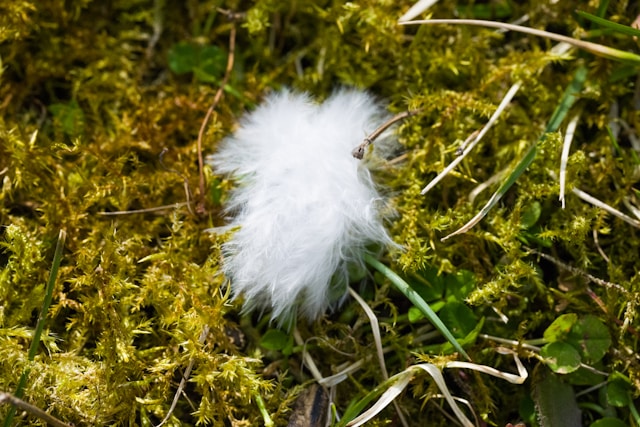
Many feathered dinosaurs likely shed and regrew their feathers in regular moulting cycles, similar to modern birds. Rather than keeping the same feathers for life, worn or damaged feathers would have been replaced over time, helping dinosaurs maintain warmth, balance, and overall feather quality.
This process was important for both survival and communication. Fresh feathers improved insulation and agility, and in some species helped preserve colours or shapes used for display and attracting mates. The ability to lose and regrow feathers also strengthens the link between dinosaurs and birds, showing that dinosaurs were active, changing animals whose bodies adapted throughout their lives rather than remaining fixed or unchanging.
Did you know?
Fossilised Nests Show Eggs Arranged Carefully
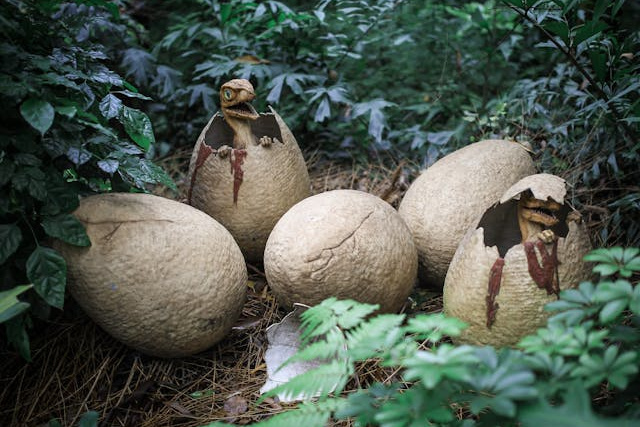
Fossilised nests show that many dinosaurs arranged their eggs with care rather than laying them at random. Eggs were often placed in circles, spirals, or neat clusters inside shallow pits or built-up nests made from soil, sand, or vegetation, suggesting that dinosaurs carefully chose nesting sites to protect their developing young.
This careful arrangement may have helped control temperature and airflow, keeping eggs warm without overheating and improving the chances of successful hatching. In some areas, nests are found grouped together, indicating that certain dinosaurs may have nested in colonies. These discoveries show that many dinosaurs invested time and planning in reproduction, revealing that caring for the next generation was an important part of their behaviour.
Did you know?
Some Dinosaurs Had Armour Made of Bone
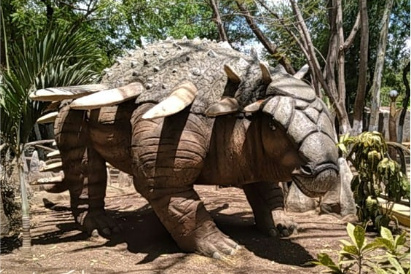
Some dinosaurs evolved thick armour made of bone, known as osteoderms, which were embedded in their skin and acted as natural body armour. This protective covering helped shield vulnerable areas from predators and allowed these dinosaurs to survive without relying on speed or aggression.
Armoured species developed different forms of protection, from broad bony plates to sharp spikes, making them difficult and dangerous to attack. In addition to defence, this armour may have helped regulate body temperature or signal strength and maturity, showing that dinosaurs used a wide range of strategies to survive in a world full of predators.
What's Inside This Dinosaur Book?
All About Dinosaurs is organised into short, easy-to-digest sections that cover the key aspects of dinosaur life and science.
Topics include:
- ✓ Dinosaur bodies and abilities
Feathers, bites, speed, senses and other adaptations that helped dinosaurs thrive.
- ✓ Behaviour and family life
Nesting, parenting, herds, communication and how dinosaurs interacted with each other.
- ✓ Habitats and environments
From polar regions to deserts, and how different species survived in extreme conditions.
- ✓ Fossils and discoveries
How palaeontologists find and study fossils, and how new technology keeps changing what we know.
- ✓ Extinction and legacy
What happened at the end of the Age of Dinosaurs and how their descendants live on today.
The result is a non-fiction dinosaur book that works as a quick reference, a cover-to-cover read, or a starting point for deeper research into prehistoric life.